Turn on suggestions
Auto-suggest helps you quickly narrow down your search results by suggesting possible matches as you type.
- Canon Community
- Discussions & Help
- Camera
- EOS DSLR & Mirrorless Cameras
- Re: EOS 70D autofocus tracking???
Options
- Subscribe to RSS Feed
- Mark Topic as New
- Mark Topic as Read
- Float this Topic for Current User
- Bookmark
- Subscribe
- Mute
- Printer Friendly Page

Options
- Mark as New
- Bookmark
- Subscribe
- Mute
- Subscribe to RSS Feed
- Permalink
- Report Inappropriate Content
09-04-2013 02:30 PM
Will the phase detect 19 point AF system in the 70D track subjects moving toward the camera at 100 miles per hour in AI Server mode? In other words, is the 70D usable for still photos of aircraft in flight, horse racing and automobile racing? Any references to articles on the 70D AF sustem that discuss its ability to track subjects moving toward the camera would be appreciated. Thanks.
Bill
Solved! Go to Solution.
80 REPLIES 80


Options
- Mark as New
- Bookmark
- Subscribe
- Mute
- Subscribe to RSS Feed
- Permalink
- Report Inappropriate Content
09-05-2013 04:46 PM - edited 09-05-2013 04:55 PM
“I do not understand your comments. I currently have a 60D and a 6D.”
Bill,
I am sorry for the confusion. Being a 5D owner I can testify to it's unbelievable ability. IMHO, if I woke up in your shoes tomorrow and decided I needed a better camera, I would get the 5D and sell the 6D. I would forgo the apparent gain form the 1.6 crop sensor of a 7D or 70D. Now that is just my opinion but none of these are in it's (5D) class. My thinking was $2000 for a 6D and $1200 for the 70D is nearly what you would spend on a 5D Mk III. You could also buy a 1.4x tele adapter but that puts the price equalization out of wack unless you also sell the 60D.
However, now that my feeble brain has wrapped itself around your true question, I would, in your case, buy a 70D and not the 7D as I earlier suggested.
If you do not need the more robust build of a 7D, than a 70D will be great. The 70D shares almost the exact specs as the 7D except for the build. I have a friend that just loves hers.
PS. I would still give that 5D a long hard look before you pull the trigger. I have both and I shoot both side by side and have done comparisons in Photoshop. If the 7D beats the 5D when each is at the same enlargement it is in the pixel peeping range.
Is there really a 1.6 crop advantage? Yeah, there probably still is but it is slight.
Good luck with your decision,
EB
EB
EOS 1DX and many lenses.
EOS 1DX and many lenses.
Options
- Mark as New
- Bookmark
- Subscribe
- Mute
- Subscribe to RSS Feed
- Permalink
- Report Inappropriate Content
09-05-2013 09:29 PM
Thanks for the clarification EB. I did think long and hard about the 5D III before I bought the 6D. Everyone's needs and budget are a bit different and I think I made the right decision for myself. That said, I have a couple of friends that have the 5D III and they both love it. It is a great camera.
Bill
Options
- Mark as New
- Bookmark
- Subscribe
- Mute
- Subscribe to RSS Feed
- Permalink
- Report Inappropriate Content
09-06-2013 06:56 AM
"Everyone's needs and budget are a bit different ..."
So true and exactly why Canon has so many choices. The biggest issue we all have is, learn to use what you have!
All the best to you and good luck with it.
EB
EB
EOS 1DX and many lenses.
EOS 1DX and many lenses.
Options
- Mark as New
- Bookmark
- Subscribe
- Mute
- Subscribe to RSS Feed
- Permalink
- Report Inappropriate Content
05-12-2014 08:40 AM
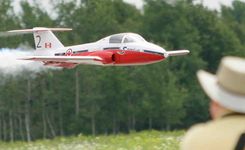
I realize that I'm late to this discussion but I am wrestling with the same questions. I have a 6D and have been using it for lots of different photographic situations, including, bird and aviation. I recently photographed an air show (Blue Angels, etc.) with the 6D and the EF 70-300mm F/4.0-5.6 IS lens, mstly shooting at 300mm. Results were disappointing. I attributed this to a few factors. Inexperience, shooting IS on "1", chromatic abberation of the lens (even with chromatic correction enabled), and poor physical position relative to the action. The next day I switched to my EF 300mm F/4.0 IS USM, switrched the IS to position "2" and got closer to the action with pretty amazng results. One thing I found challenging was getting the focus I wanted. I keep switching between center spot focus and all sensors on AI focus. I still lost focus often when the subject was not over one of the selected sensors. When this happened, the 6D went searching for focus and the imaged blurred. After that happened it was almost impossible to obtain focus. I had to point at the horizon to return the focus to near infinity then go hunting for the plane. This happened about 10 to 20% of the time. It happens a lot when I photograph birds. this experience leaves me with the question, is there a better body for photographing planes and birds.
Enter the 'reach' issue. I find the 300mm too short for birds and planes. At best the subject fills only about 10% of the field and often as low as 3%. After cropping, I find that I can only get a crisp print up to an 8" x 10". After that things get soft. This makes it pretty useless as I am interested in printing large. So my question is: How can I improve my printing results without buying a Mark III and the 600mm lens? (Read "spend $10,000") From various forums the low cost solution seems to be go to an APS-C sensor and add a 1.4x teleconverter. According to my calculations this would increase the fraction of the field that the subject occupies from 3 to 10% up to 7 to 25%. So it all boils down to this. Can I get crisp 20"x30" prints with the following system:
Canon 70D body
EF Canon 300mm F/4.0 IS lens
canon 1.4x III teleconverter
According to calculations based on 200 dpi recommended print density, 20 megapixel file should provide the pixels for a 18" x 27" print at 200 dpi (no cropping). Will the print be " tack sharp." Can this expectation be met by the system described?
Options
- Mark as New
- Bookmark
- Subscribe
- Mute
- Subscribe to RSS Feed
- Permalink
- Report Inappropriate Content
05-12-2014 09:41 AM
Shooting air shows takes a bit of panning skill & I have no experience with the 70D but did shoot R/C with a 7D and it did fine (R/C is harder than full scale). The most common air show lens is the 100-400 L IS but that may change if the new Tamron 150-600 can focus fast enough. Adding a TC to most lenses slows the AF & makes things more difficult. Anything bigger is too hard to hand hold which is a problem so do some careful homework before buying. As for settings my comments here might help.
http://photography-on-the.net/forum/showthread.php?t=1375772
or this article here but keep in mind the shutter speeds are for R/C.
http://www.rccanada.ca/rccforum/showthread.php?t=147971
As for printing I've made several large prints after cropping but I'd have to find the original files before cropping to see just how deep I went (which I'll try to do tonight) BUT you need a very sharp image to start with or the flaws will grow as you crop.
"A skill is developed through constant practice with a passion to improve, not bought."
Options
- Mark as New
- Bookmark
- Subscribe
- Mute
- Subscribe to RSS Feed
- Permalink
- Report Inappropriate Content
05-12-2014 09:47 AM
Can that equipment provide a sharp print? Yes, it can. Will it be as sharp as you want? Who knows!
You will just have to try and practice. Shoot a lot. Learn the best way to use it.
Secondly, it is not the paper size, 8 x 10, that is critical but the subject size is. It depends on how much of a percentage you enlarge, blow up, your image. You can have an 8 x 10 that has no enlargement done and you can have one that has a 100% enlargement. Which will be sharper?
I shoot all three sensor sizes, 1.6, 1.3 and FF. With everything being absolutely equal except sensor size, I doubt there is any benefit from the crop factor. If there is it is very slight. To this end I doubt Canon will ever make another 1.3 body.
Some rumors suggest the 1.6 may be on the short list, also.
Budget allowing the EOS 5D Mk III is as good as it gets right now. Crop or not.
EB
EOS 1DX and many lenses.
EOS 1DX and many lenses.
Options
- Mark as New
- Bookmark
- Subscribe
- Mute
- Subscribe to RSS Feed
- Permalink
- Report Inappropriate Content
05-12-2014 09:56 AM - edited 05-12-2014 09:57 AM
As you regulars here already know, I don't like 3rd party lenses. But the Tamron 150-600mm has a lot of appeal. It's price being the single most atractive. I can not find one for sale at my preffered outlets and maybe to the good. 
There are lots of reports of problems with focus on the Canon 7D.
At any rate it is at the limit of f ratio for good focus speed at best. Maybe the lack of availability, is a fix being made by Tamron.
It just might be a lens that is too good to be true.
EB
EOS 1DX and many lenses.
EOS 1DX and many lenses.
Options
- Mark as New
- Bookmark
- Subscribe
- Mute
- Subscribe to RSS Feed
- Permalink
- Report Inappropriate Content
05-12-2014 09:58 AM
Thanks. So you're saying that I shouldn't go to the 70D just for crop factor / increased reach. Should I do it for improved focusing capability?
How about teleconverters to increase reach? I heard that the 1.4x is the way to go. Bu I also heard that the 2.0x III is quite good.
I just can't justify the $3,300 for a Mark III plus the $13,000 for the EF 600mm F/4.0.
How can I best extend my reach on a budget?
Options
- Mark as New
- Bookmark
- Subscribe
- Mute
- Subscribe to RSS Feed
- Permalink
- Report Inappropriate Content
05-12-2014 04:21 PM
2 different problems with using teleconverters. Firstly they slow down the AF & secondly they cut the light, To use a 2X TC & retain AF you need either an f2.8 lens or a 5D3 or 1 series body because none of the other bodies can AF at f8.0. &d or 70D can't AF if you add a 2X TC to an f4.0 or smaller aperture lens & I doubt you'd want to shoot air show type stuff manually even though it can be done that way. Now to compare the difference between shooting a FF body against a 1.6 cropper you need to understand the sensor ratios. The artificial reach from the crop body can be huge if deep crops are needed because the crop bodies full frame is roughly 40% of the full frame image. In other words (hopefully easier to understand) IF the full frame camera had 20 Megapixels ONLY 8 Megapixels would be left when cropped to the same field of view the crop body saw (and captured)
FF sensor area = 864 sq mm
70D sensor area = 337.5 sq mm
Ratio of one to the other = .3906 or 40%
Therefore IF you want to shoot FF and get crop body pixel count you'll need a full frame body with roughly 50 megapixels. .
"A skill is developed through constant practice with a passion to improve, not bought."
Options
- Mark as New
- Bookmark
- Subscribe
- Mute
- Subscribe to RSS Feed
- Permalink
- Report Inappropriate Content
05-12-2014 05:18 PM - edited 05-12-2014 05:19 PM
In photography there usually is no right, or wrong, answer. And there certainly is no free lunch. You give to get.
The facts are, however, bigger pixels collect more light. More photons means a more clean image compared to the relatively tightly packed pixels on crop-sensor cameras.
No matter what the pixel size, larger sensors unavoidably have more light-gathering area. A larger sensor with smaller pixels will still have lower apparent noise than a smaller sensor with larger pixels. This is because noise in the higher resolution camera gets enlarged less as does all the other bad things.
To this end a 18 MP full frame sensor is going top produce a sharper image than a 18 MP crop sensor. Even cropped to the same printed size.
Increasing mega-pixels count on a given size sensor chip can have negative impact on image quality. Pushing more pixels on a given sensor chip results in smaller individual pixel size. Less light gathering ability. In the pixel world size does matter.
The cost of a digital sensor rises dramatically as its area increases. This is why crop size sensors were designed in the first place. To keep the cost where a person could likely afford it. Plus some other technical obstacles to solve. Like ten FPS shooting.
An example is the Canon's flagship EOS 1Dx ($6800.00) which has a 18 MP full frame sensor. Size of the pixel and the total count of pixels must both be taken into consideration. The 1.3 size sensor of the previous 1 Series cameras is likely done. Largely because it can do nothing better than this full frame model. Even though 1.3 has an advantage with telephoto lens in apparent reach, the resulting photo is not better.
If you are not comparing exact equipment and conditions you may well see an advantage with one camera over another but that is just the point. Even in crop vs crop there are differences and FF vs FF there are, too.
This debate will likely go on for a long time yet. But always remember in pixels, size does matter. The bigger pixel will generally win out over smaller ones.
EB
EOS 1DX and many lenses.
EOS 1DX and many lenses.

Announcements
07/22/2026: New firmware updates are available.
EOS R6 Mark III - Version 1.1.0
05/13/2026: New firmware updates are available.
EOS R5 Mark II - Version 1.3.0
EOS R6 Mark II - Version 1.7.0
04/28/2026: Service Notice: Caution Concerning use of Lithium Batteries
03/17/2026: New firmware updates are available.
SELPHY CP1500 - Version 1.0.7.0
02/23/2026: New firmware update is available for EOS C50- Version 1.0.3.1
01/23/2026: New firmware update is available for RF 24-105mm F4 IS USM- Version 2.0.7
01/20/2026: New firmware updates are available.
10/21/2025: Service Notice: To Users of the Compact Digital Camera PowerShot V1
10/15/2025: New firmware updates are available.
Speedlite EL-5 - Version 1.2.0
Speedlite EL-1 - Version 1.1.0
Speedlite Transmitter ST-E10 - Version 1.2.0
07/28/2025: Notice of Free Repair Service for the Mirrorless Camera EOS R50 (Black)
05/21/2025: New firmware update available for EOS C500 Mark II - Version 1.1.5.1
Related Content
- Aperture communication issues between Canon EOS R8 and sigma 150-600mm f/5-6.3 DG OS HSM C in EOS DSLR & Mirrorless Cameras
- EF 100-400 IS II dust gasket detached in EF & RF Lenses
- EOS Rebel G Shutter Button not Working in EOS DSLR & Mirrorless Cameras
- EOS R5 Mark II custom button for Spot AF in EOS DSLR & Mirrorless Cameras
- Manual focus not working with Canon RF 24-70mm F2.8L on R6MII in EF & RF Lenses

Ⓒ 2026
Canon U.S.A Inc. All Rights Reserved. Reproduction in whole or part without permission is prohibited.
