Turn on suggestions
Auto-suggest helps you quickly narrow down your search results by suggesting possible matches as you type.
- Canon Community
- Discussions & Help
- Gear Guide
- Re: Godox TT685II On-Camera Flash with Trigger and...
Options
- Subscribe to RSS Feed
- Mark Topic as New
- Mark Topic as Read
- Float this Topic for Current User
- Bookmark
- Subscribe
- Mute
- Printer Friendly Page
Godox TT685II vs ring light for macro photography?


Options
- Mark as New
- Bookmark
- Subscribe
- Mute
- Subscribe to RSS Feed
- Permalink
- Report Inappropriate Content
01-26-2026
05:49 PM
- last edited on
01-27-2026
09:44 AM
by
 Danny
Danny
I am looking to pick up the Godox TT685II On-Camera Flash with Trigger and Accessories Kit for Canon Cameras and AK Diffuser, I have been advised but a few people to avoid ring lights for macro because "A ringlight has very unnatural light characteristics and very fast light falloff due to the proximity to the subject." I was wondering what everybody's thought are on this that shoot macro?
I intend to shoot bugs, flowers, interesting textures and so on. So far I have been having a hard time shooting indoors, I am a outdoors guy but my body currently has me limited.
10 REPLIES 10
Options
- Mark as New
- Bookmark
- Subscribe
- Mute
- Subscribe to RSS Feed
- Permalink
- Report Inappropriate Content
01-26-2026 09:09 PM - edited 01-26-2026 09:09 PM
So am I better with the ring flash or going with the standard flash with the AK Diffuser? I am looking to buy soon so would like some opinions from those that shoot macro heavily?

Options
- Mark as New
- Bookmark
- Subscribe
- Mute
- Subscribe to RSS Feed
- Permalink
- Report Inappropriate Content
01-26-2026 09:28 PM
Sorry that I cannot help from experience. Would love to hear how it works out for you. I'm planning on picking up a Pope Shield diffuser https://popeshield.com/ and pairing it with a Speedlight - have the EL-5 and 430EXIII-RT. If I decide to use pair them I'll get the Godox triggers I hear that the RF can be a bit iffy on the EL-5. Not likely, but I might try the 430EXIII-RT with diffuser as a secondary in the field first to see how it works out, as it's unlikely I'll be shooting near much wifi interference. I tried them in my house and they worked fine.
>> Owns/Owned both Canon EOS mirrorless full-frame and APS-C cameras and associated RF, RF-S and EF adapted lenses - inventory tends to change on short notice. Same for flashes, tripods, bags, straps, etc.
Plus>> Canon imagePROGRAF PRO-1100 Printer. My photos are edited using no Adobe products.
>>The opinions and assistance are my own. Please don't blame Canon for any mistakes on my part.
Options
- Mark as New
- Bookmark
- Subscribe
- Mute
- Subscribe to RSS Feed
- Permalink
- Report Inappropriate Content
01-26-2026 10:07 PM - edited 01-26-2026 10:11 PM
I have never worked with a flash before other than flashcubes on my old 110 and 35mm back in the day so I am very lost with this and really do need some help. I am not entirely sure what the triggers even do, I think they are for working multiple flashes at delayed times but I am not sure about that.
Options
- Mark as New
- Bookmark
- Subscribe
- Mute
- Subscribe to RSS Feed
- Permalink
- Report Inappropriate Content
01-27-2026 07:32 AM
I usually had a built-in flash in older cameras (Minolta Weathermatic 110, then some Nikon consumer 35mms). I learned to use remote flashes first on a Nikon 35, then Canon. I rarely use flash, though, so I'm not very expert. Thankfully, it's not all that hard. Canon has transitioned from IR/Optical communication on their units to RF.
While I am not wholly new to multiple flashes, I am wholly new to macro myself. I plan to have fun experimenting. I know Marc and Wadizzle do macro work. Hopefully one of them or the others who are experts can chime in. I looked at the AK diffuser. Seems like they build you a custom setup, vs the "buy the right size" for the Pope Shield. Sounds nice - may have to consider that.
I read of some who recommend starting with no flash at all. I don't read great things about ring flash except for specific applications - dental, lab, etc. I don't personally play to try it and am going to opt for flash and diffuser. Even though my Speedlight 430EXIII-RT came with a diffuser I don't plan to counting that to be satisfactory for macro work.
>> Owns/Owned both Canon EOS mirrorless full-frame and APS-C cameras and associated RF, RF-S and EF adapted lenses - inventory tends to change on short notice. Same for flashes, tripods, bags, straps, etc.
Plus>> Canon imagePROGRAF PRO-1100 Printer. My photos are edited using no Adobe products.
>>The opinions and assistance are my own. Please don't blame Canon for any mistakes on my part.

Options
- Mark as New
- Bookmark
- Subscribe
- Mute
- Subscribe to RSS Feed
- Permalink
- Report Inappropriate Content
01-27-2026 11:53 AM - edited 01-27-2026 11:55 AM
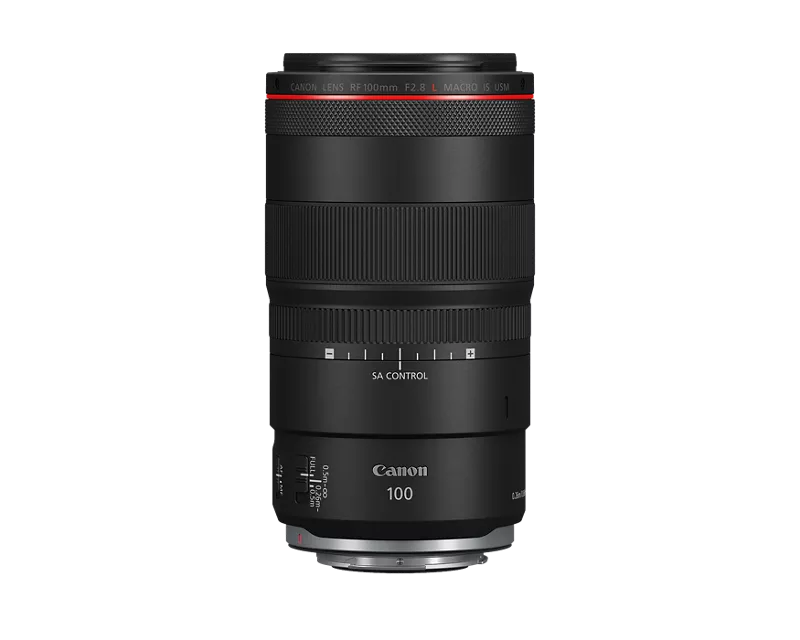
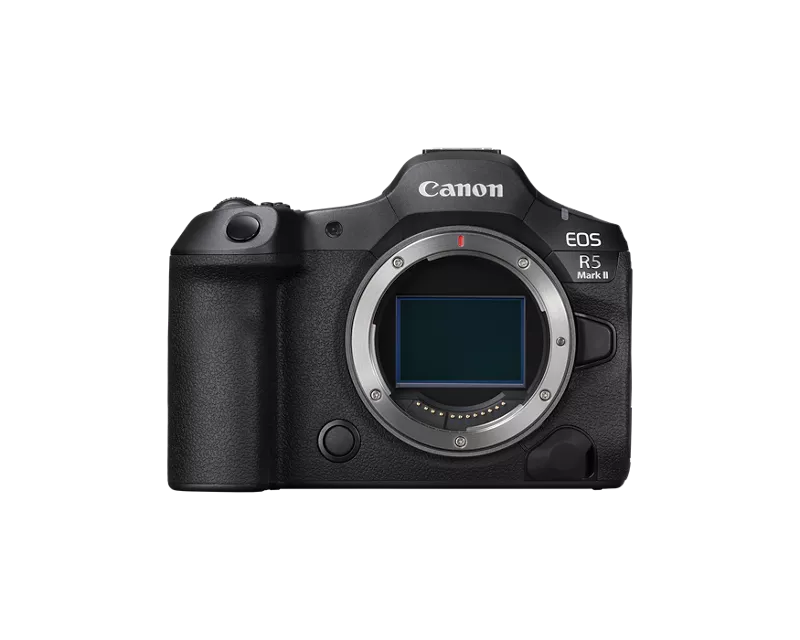
I will start out by saying I'm no expert but shoot quite a bit of macro using my R5/R6 MKII, the RF100mm macro and the EF Laowa 180mm F4.5 CA-Dreamer Macro 1.5X with a control ring. Both work great. I run the Westcott FJ80 II M Universal which works well on all my bodies (TTL not available).
For diffusers I run the AK and the Westcott Diffusion Dome, both work great, the AK is a bit softer and I get less reflection on the eyes.
I run 100% manual and use the camera focus assist (red color) to grab my shots. Get you focus by rock/moving slightly from the subject and grab some frames.


Marc
Windy City
To find common ground you must be willing to search for it.
Our interests intersect more than they diverge.
R5 Mk II ~ R6 Mk III ~ R7
Lenses: RF Trinity and others
Adobe and DxO PhotoLab Elite for post processing
Personal Gallery
Options
- Mark as New
- Bookmark
- Subscribe
- Mute
- Subscribe to RSS Feed
- Permalink
- Report Inappropriate Content
01-27-2026 12:44 PM
Thanks Marc. Do you stack? Focus bracket? What do you use for post? Thanks again!
>> Owns/Owned both Canon EOS mirrorless full-frame and APS-C cameras and associated RF, RF-S and EF adapted lenses - inventory tends to change on short notice. Same for flashes, tripods, bags, straps, etc.
Plus>> Canon imagePROGRAF PRO-1100 Printer. My photos are edited using no Adobe products.
>>The opinions and assistance are my own. Please don't blame Canon for any mistakes on my part.
Options
- Mark as New
- Bookmark
- Subscribe
- Mute
- Subscribe to RSS Feed
- Permalink
- Report Inappropriate Content
01-27-2026 12:50 PM - edited 01-27-2026 12:52 PM
I subscribe to the Adobe suite and beta test for Topaz so for sharpening and noise that is my go to.....
Photoshop, Camera Raw has all the tools these days so I would probably say that is my primary with DPP4 being a secondary. DPP4 is used first for review and culling images.
I do stack when the subjects allow, wind is an issue and bugs like to walk so stacking can be a challenge. Static subjects or bugs that behave I do stack mostly hand held.
This is a 20 frame stack from this fall

Marc
Windy City
To find common ground you must be willing to search for it.
Our interests intersect more than they diverge.
R5 Mk II ~ R6 Mk III ~ R7
Lenses: RF Trinity and others
Adobe and DxO PhotoLab Elite for post processing
Personal Gallery
Options
- Mark as New
- Bookmark
- Subscribe
- Mute
- Subscribe to RSS Feed
- Permalink
- Report Inappropriate Content
01-27-2026 10:13 PM - edited 01-27-2026 10:15 PM
What do you mean by "Get you focus by rock/moving slightly from the subject and grab some frames." I need to learn so much like focus stacking and so on. I am still not sure if I should buy that flash or not?
Options
- Mark as New
- Bookmark
- Subscribe
- Mute
- Subscribe to RSS Feed
- Permalink
- Report Inappropriate Content
01-28-2026 08:21 AM
The subject matter for macro is the majority of the time small and the camera will be challenged to focus on the subject if using AF. Focus peaking will assist in knowing when your subject is in focus. To enable see the steps below. Be aware that the AF menu prompt in the menu could be different depending on your body.
Focus peaking outlines your subject with the color you selected in the menu. Unless my subject is red, I always use red, if the subject is red, I change it to yellow/white.
Using the lens in manual, single point focus and focus peaking enabled focus manually using your lens. You will find you can get close by turning the barrel of the lens but the subject will fade in and out of focus. That because the subject is moving or you can’t become a statue and stand completely still.
Get your focus close, as tight as possible and move ever so slightly back and forth from the subject. Looking through your EVF or LCD (I never use the LCD) you will see your focus improve and diminish by watching the focus peaking in action. When you sway into the full focus shutter the camera.
Now I will say that there is occasions when I will lose the shot but my thought is, better to get the shot in focus then to capture the subject but it be out of focus….YMMV
As for the flash, the Godex will work manually (not TTL) which is the only way I use my Westcott. I sent a DM to deebatman316 and asked him to check out the post. He is the Master of flash!
Setting MF Peaking (Outline Emphasis)
Edges of subjects in focus can be displayed in color to make focusing easier. You can set the outline color and adjust the sensitivity (level) of edge detection.
-
In your menu select
March411_0-1769605414379.jpeg and follow the prompts below
: MF peaking settings].
March411_1-1769605414301.jpeg
-
Select [Peaking].
March411_2-1769605414303.jpeg
- Select [On].
-
Set [Level] and [Color].
March411_3-1769605414354.jpeg
Marc
Windy City
To find common ground you must be willing to search for it.
Our interests intersect more than they diverge.
R5 Mk II ~ R6 Mk III ~ R7
Lenses: RF Trinity and others
Adobe and DxO PhotoLab Elite for post processing
Personal Gallery

Announcements
07/22/2026: New firmware updates are available.
EOS R6 Mark III - Version 1.1.0
05/13/2026: New firmware updates are available.
EOS R5 Mark II - Version 1.3.0
EOS R6 Mark II - Version 1.7.0
04/28/2026: Service Notice: Caution Concerning use of Lithium Batteries
03/17/2026: New firmware updates are available.
SELPHY CP1500 - Version 1.0.7.0
02/23/2026: New firmware update is available for EOS C50- Version 1.0.3.1
01/23/2026: New firmware update is available for RF 24-105mm F4 IS USM- Version 2.0.7
01/20/2026: New firmware updates are available.
10/21/2025: Service Notice: To Users of the Compact Digital Camera PowerShot V1
10/15/2025: New firmware updates are available.
Speedlite EL-5 - Version 1.2.0
Speedlite EL-1 - Version 1.1.0
Speedlite Transmitter ST-E10 - Version 1.2.0
07/28/2025: Notice of Free Repair Service for the Mirrorless Camera EOS R50 (Black)
05/21/2025: New firmware update available for EOS C500 Mark II - Version 1.1.5.1
Related Content
- Portrait lens recommendations for EOS R50 in Gear Guide
- Control Zoom of PZ lens with DJI gimbal in Video Accessories
- Help finding new camera body compatible with EOS 60D lenses and accessories in Gear Guide
- Godox TT685II vs ring light for macro photography? in Gear Guide
- Request for Donation of Photography Equipment for Student Artists at NWSA in General Discussion

Ⓒ 2026
Canon U.S.A Inc. All Rights Reserved. Reproduction in whole or part without permission is prohibited.
