Turn on suggestions
Auto-suggest helps you quickly narrow down your search results by suggesting possible matches as you type.
- Canon Community
- Discussions & Help
- Camera
- EOS DSLR & Mirrorless Cameras
- Problems shooting the moon with EOS 90D
Options
- Subscribe to RSS Feed
- Mark Topic as New
- Mark Topic as Read
- Float this Topic for Current User
- Bookmark
- Subscribe
- Mute
- Printer Friendly Page

Options
- Mark as New
- Bookmark
- Subscribe
- Mute
- Subscribe to RSS Feed
- Permalink
- Report Inappropriate Content
10-09-2025
12:22 PM
- last edited on
10-09-2025
12:32 PM
by
 Ron
Ron
Hi folks from the North of England
Tuesday, this week, we were due another special big Moon, but the forecast predicted clouds, and they were right.
But on Monday, we had clear skies so here we go. My biggest lens (70-300) on my EOS90D and point at the Moon as it rises into the sky. The zoom was fully extended and I decided to try aperture priority f4-5.6 because I wanted to catch some trees and the church spires in the foreground. I was on autofocus and when I pressed the AF button the camera made a wirring noise and the size of the moon shrunk in viewfinder - but in focus.
To keep a long story short, I was a bit confused and wasn't sure what had happened. So last night (we had another clear night) and went out again, but this time on M and Manual focus. I was able to get a bigger Moon in my view finder, but failed to get a clear focus. It was very fuzzy around the edges, and I went back and forth with the focus ring to no avail.
So, I feel I'm putting my head on the block asking a dumb question - but what is scientific, mathematical or physics reason for this occurence. Why can't I just zoom out and focus?
The 1st photo is of the foreground with trees and church - i went to a better place in the evenings.
The 2nd is from Monday with AF with clear outline and you can see the lunar landscape.
3rd is last night with MF


Thanks as ever
Ramsden
Solved! Go to Solution.
2 ACCEPTED SOLUTIONS
Accepted Solutions


Options
- Mark as New
- Bookmark
- Subscribe
- Mute
- Subscribe to RSS Feed
- Permalink
- Report Inappropriate Content
10-09-2025 04:46 PM
The moon is illuminated by the sun. Starting point for exposure would be the Loony 11 Rule f/11 with shutter speed 1/ISO. For example f/11, ISO 125, Tv 1/125.
John Hoffman
Conway, NH
R6 Mark III, M200 (converted to infrared), RF lenses, Pixma PRO-100, Pixma TR8620a, Lr Classic
Conway, NH
R6 Mark III, M200 (converted to infrared), RF lenses, Pixma PRO-100, Pixma TR8620a, Lr Classic
Options
- Mark as New
- Bookmark
- Subscribe
- Mute
- Subscribe to RSS Feed
- Permalink
- Report Inappropriate Content
10-11-2025 03:14 AM
I should also add that one of my favourite Tom Waits' tracks is: "I'll Shoot The Moon Right Out of The Sky" - but that's for another forum!
11 REPLIES 11
Options
- Mark as New
- Bookmark
- Subscribe
- Mute
- Subscribe to RSS Feed
- Permalink
- Report Inappropriate Content
10-09-2025 04:46 PM
The moon is illuminated by the sun. Starting point for exposure would be the Loony 11 Rule f/11 with shutter speed 1/ISO. For example f/11, ISO 125, Tv 1/125.
John Hoffman
Conway, NH
R6 Mark III, M200 (converted to infrared), RF lenses, Pixma PRO-100, Pixma TR8620a, Lr Classic
Conway, NH
R6 Mark III, M200 (converted to infrared), RF lenses, Pixma PRO-100, Pixma TR8620a, Lr Classic

Options
- Mark as New
- Bookmark
- Subscribe
- Mute
- Subscribe to RSS Feed
- Permalink
- Report Inappropriate Content
10-09-2025 04:51 PM
The depth of field (closest to most distant object that is still within focus) is based upon your aperture and your distance from the objects. With your 70-300mm lens choosing f8, with it zoomed to 300mm and you standing 100 meters from your subject, then objects that are between 86 and 119 meters away will be in focus. If you change your focal length to 70mm, then subjects between 25 meters out to infinity will be within critical focus but of course the moon will appear quite small.
As to manual focusing, there may well have been more "atmospherics" at play when you were attempting manual focus and atmospheric conditions (high level moisture, smoke, temperature inversion layers) will prevent an extremely sharp image of a distant object even when it is perfectly focused. Many zoom lenses require refocusing when dramatically changing the focal length. They are complex beasts with a lot of moving and fixed components for both "zoom" and focusing and it isn't at all unusual for the focus to need correction when changing focal length.
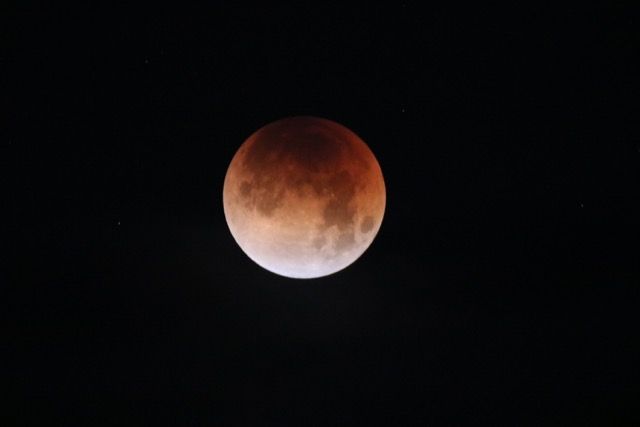
For the moon itself to be sharp, you need to be fortunate enough to have great viewing conditions at your location and as photographers we can't control the weather. The attached photos were taken several years ago with my Canon 1DX III attached to the Celestron CPC 1100HD telescope when the conditions were pretty much perfect.
Rodger


EOS 1DX M3, 1DX M2, 1DX, 5DS R, M6 Mark II, 1D M2, EOS 650 (film), many lenses, XF400 video
Options
- Mark as New
- Bookmark
- Subscribe
- Mute
- Subscribe to RSS Feed
- Permalink
- Report Inappropriate Content
10-09-2025 05:08 PM
Thanks Guys - that's really interesting. I'd never heard of the Loony 11. More research, practice and learning for me. Great shots of the moon.
Thanks again
R
Options
- Mark as New
- Bookmark
- Subscribe
- Mute
- Subscribe to RSS Feed
- Permalink
- Report Inappropriate Content
10-09-2025 08:39 PM
@BigAmericanHand wrote:
If you want moon pictures, why not just get them from some astronomy website?
Where is the fun in that? It is like George Utley using the images that came with his frames because he did not have any family.

Options
- Mark as New
- Bookmark
- Subscribe
- Mute
- Subscribe to RSS Feed
- Permalink
- Report Inappropriate Content
10-10-2025 06:20 AM
Using a tripod and turning off lens IS should produce much better results.
--------------------------------------------------------
"Enjoying photography since 1972."
"Enjoying photography since 1972."

Options
- Mark as New
- Bookmark
- Subscribe
- Mute
- Subscribe to RSS Feed
- Permalink
- Report Inappropriate Content
10-10-2025 07:23 AM
Also, to get the shot you want you will most certainly need to do a double exposure and expose twice. Once for the foreground and once for the moon. Since the moon is a sunlight object, to get detail you need much less exposure than the foreground churchyard.
Options
- Mark as New
- Bookmark
- Subscribe
- Mute
- Subscribe to RSS Feed
- Permalink
- Report Inappropriate Content
10-10-2025 09:46 AM
That makes perfect sense and explains why the church and trees didnt stand out.
I'm glad I asked the question now. You guys always deliver!
Options
- Mark as New
- Bookmark
- Subscribe
- Mute
- Subscribe to RSS Feed
- Permalink
- Report Inappropriate Content
10-10-2025 09:52 AM
I should add that I was expecting someone to tell me to get a much bigger lens. But the shot I have in my head is meant to be 'spooky' with the church spires and trees - not a full blown moon.
Thanks guys
Ramsden
Options
- Mark as New
- Bookmark
- Subscribe
- Mute
- Subscribe to RSS Feed
- Permalink
- Report Inappropriate Content
10-10-2025 05:01 PM
You mean like this:
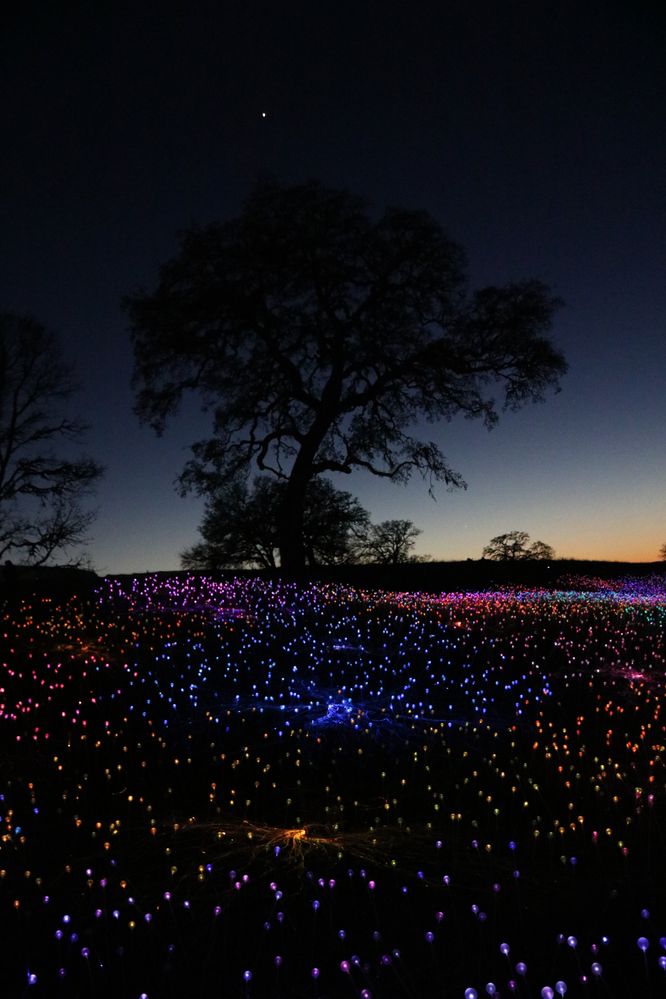
I think this moon is even tinier than the one you wanted!
When I posted this shot, a poster who shall go nameless *cough*ebiggs*cough* reposted a version with a huge moon composited (I almost said composted!) in. It totally ruined the artistic effect I was going for. So unless you complain that you can't get the detail in a moon-only shot, we won't suggest a longer lens.
If it was good enough for Ansel Adams in "Moonrise over Hernandez New Mexico", small moons are fine!

Announcements
07/22/2026: New firmware updates are available.
EOS R6 Mark III - Version 1.1.0
05/13/2026: New firmware updates are available.
EOS R5 Mark II - Version 1.3.0
EOS R6 Mark II - Version 1.7.0
04/28/2026: Service Notice: Caution Concerning use of Lithium Batteries
03/17/2026: New firmware updates are available.
SELPHY CP1500 - Version 1.0.7.0
02/23/2026: New firmware update is available for EOS C50- Version 1.0.3.1
01/23/2026: New firmware update is available for RF 24-105mm F4 IS USM- Version 2.0.7
01/20/2026: New firmware updates are available.
10/21/2025: Service Notice: To Users of the Compact Digital Camera PowerShot V1
10/15/2025: New firmware updates are available.
Speedlite EL-5 - Version 1.2.0
Speedlite EL-1 - Version 1.1.0
Speedlite Transmitter ST-E10 - Version 1.2.0
07/28/2025: Notice of Free Repair Service for the Mirrorless Camera EOS R50 (Black)
05/21/2025: New firmware update available for EOS C500 Mark II - Version 1.1.5.1
Related Content
- R7 Problem connecting to iOS via Camera Connect, but Android Works in Camera Software
- Canon Remote BR-E2 Battery Problem: Unable to open battery compartment in Camera Accessories
- Feature Request: Expand “Same expo. for new aperture” to Manual Aperture Changes in EOS DSLR & Mirrorless Cameras
- EOS R6 Mark III Firmware 1.1.0 makes pics too dark in macOS Preview app and Instagram Stories in Camera Software
- Product Registration Problem: Unable to read serial number on PowerShot SX620 HS in Point & Shoot Digital Cameras

Ⓒ 2026
Canon U.S.A Inc. All Rights Reserved. Reproduction in whole or part without permission is prohibited.
