Turn on suggestions
Auto-suggest helps you quickly narrow down your search results by suggesting possible matches as you type.
- Canon Community
- Gallery
- Share Your Photos
- Re: The Migratory Black-chinned Hummingbird (Archi...
Options
- Subscribe to RSS Feed
- Mark Topic as New
- Mark Topic as Read
- Float this Topic for Current User
- Bookmark
- Subscribe
- Mute
- Printer Friendly Page
The Migratory Black-chinned Hummingbird (Archilochus Alexandri)


Options
- Mark as New
- Bookmark
- Subscribe
- Mute
- Subscribe to RSS Feed
- Permalink
- Report Inappropriate Content
05-20-2026 08:35 PM - edited 05-20-2026 08:42 PM

The Black-chinned Hummingbird is small, slender with a long, straight bill. Adult males have a dull black head and a deep black throat bordered below by iridescent purple (in good light). They are strictly migratory, with its summer range in the Western United States and Southwestern Canada and migrating for the Winter as far south as The Yucatan Peninsula, Mexico.
Cheers,
Joe
Ancora Imparo
"A good photograph is knowing where to stand."
--- Ansel Adams >
"You don’t take a photograph, you make it."
--- Ansel Adams
Joe
Ancora Imparo
"A good photograph is knowing where to stand."
--- Ansel Adams >
"You don’t take a photograph, you make it."
--- Ansel Adams

Labels:
- Labels:
-
Inspiration
-
Nature
-
Wildlife
4 REPLIES 4

Options
- Mark as New
- Bookmark
- Subscribe
- Mute
- Subscribe to RSS Feed
- Permalink
- Report Inappropriate Content
05-20-2026 11:19 PM
Joe,
I admire your skill in getting such good focus on such a well camouflaged bird.
Steve Thomas
Options
- Mark as New
- Bookmark
- Subscribe
- Mute
- Subscribe to RSS Feed
- Permalink
- Report Inappropriate Content
05-21-2026 12:28 AM
Thanks Steve !
Cheers,
Joe
Ancora Imparo
"A good photograph is knowing where to stand."
--- Ansel Adams >
"You don’t take a photograph, you make it."
--- Ansel Adams
Joe
Ancora Imparo
"A good photograph is knowing where to stand."
--- Ansel Adams >
"You don’t take a photograph, you make it."
--- Ansel Adams

Options
- Mark as New
- Bookmark
- Subscribe
- Mute
- Subscribe to RSS Feed
- Permalink
- Report Inappropriate Content
05-21-2026 02:26 AM
The throat iridescence detail here is something most hummingbird shots completely miss. Black-chinned gorges are notoriously difficult because the purple shifts to near-invisible depending on the light angle, and most people give up trying to capture it deliberately and just hope it shows up.
What shutter speed were you working with? The wing separation suggests you were well above 1/2000, which is where most garden wildlife setups top out. Also curious whether this was natural light or fill flash because the shadow detail on the underside looks cleaner than pure ambient usually allows with fast-moving subjects at this distance.
Options
- Mark as New
- Bookmark
- Subscribe
- Mute
- Subscribe to RSS Feed
- Permalink
- Report Inappropriate Content
05-21-2026 02:41 PM - edited 05-21-2026 02:47 PM
Hi mohsin025,
Re your curiosity, "What shutter speed were you working with? The wing separation suggests you were well above 1/2000, which is where most garden wildlife setups top out. Also curious whether this was natural light or fill flash because the shadow detail on the underside looks cleaner than pure ambient usually allows with fast-moving subjects at this distance."
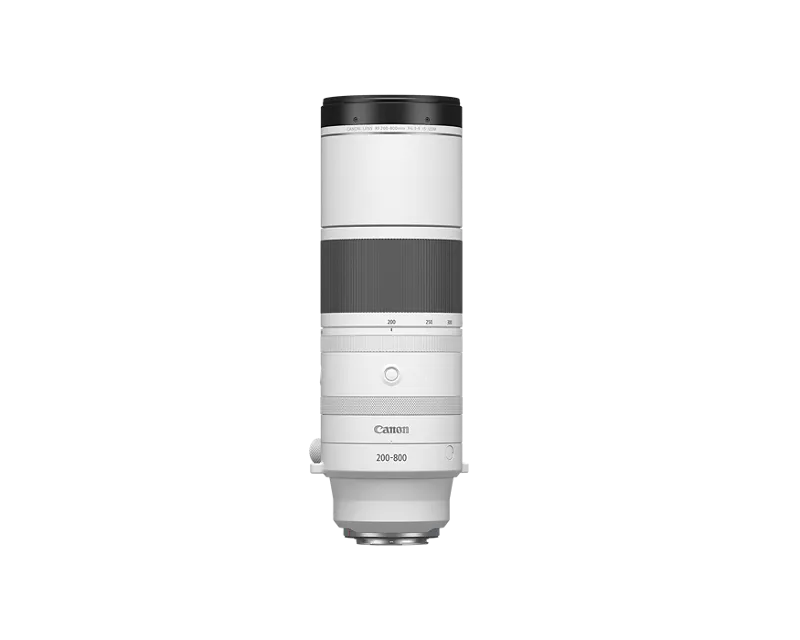
The Shutter Speed was set to 1/400s. The ISO settings for bird photography depend on the lens being used and the available light. With the RF 200–800mm F6.3–9 IS USM lens, an ISO range of 1000 to 6400 is recommended to maintain fast shutter speeds, especially at the longer focal lengths where the aperture narrows to f/9.
For wildlife photography, I personally avoid using fill flash or any flash at all, and I don’t recommend it, as it can easily spook the subject. This shot was taken while I was hiking, using only natural light.
The Black‑chinned Hummingbird was resting, and I captured its underside as it looked down at me. You’ll notice the head appears sharper than the underside. This is because the scene was lit by natural light filtering through leaves and branches, some areas appear brighter while others fall into shade, creating natural variations in exposure.
I hope, I've answered all your questions 😎
Cheers,
Joe
Ancora Imparo
"A good photograph is knowing where to stand."
--- Ansel Adams >
"You don’t take a photograph, you make it."
--- Ansel Adams
Joe
Ancora Imparo
"A good photograph is knowing where to stand."
--- Ansel Adams >
"You don’t take a photograph, you make it."
--- Ansel Adams


Related Content
- The Migratory Black-chinned Hummingbird (Archilochus Alexandri) in Share Your Photos
- Coming In For a Landing in Share Your Photos
- Capturing a Male Rufous-tailed Hummingbird with the Canon R5 and RF 100-500mm Lens in Share Your Photos
- Love at the Hummingbird Feeder in Share Your Photos
- Male Costa's Hummingbird in Share Your Photos

Ⓒ 2026
Canon U.S.A Inc. All Rights Reserved. Reproduction in whole or part without permission is prohibited.
