Turn on suggestions
Auto-suggest helps you quickly narrow down your search results by suggesting possible matches as you type.
- Canon Community
- Discussions & Help
- Camera
- Camera Software
- Digital Photo Professional - New release 4.21.30
Options
- Subscribe to RSS Feed
- Mark Topic as New
- Mark Topic as Read
- Float this Topic for Current User
- Bookmark
- Subscribe
- Mute
- Printer Friendly Page
Digital Photo Professional - New release 4.21.30


Options
- Mark as New
- Bookmark
- Subscribe
- Mute
- Subscribe to RSS Feed
- Permalink
- Report Inappropriate Content
05-22-2026 02:17 PM
For those that use it it's available here: Digital Photo Professional
When you use the link it should recognize your OS and supply the correct download. There isn't much in the way of release notes but they can be found here: Digital Photo Professional 4.21.30 for Windows
I have loaded it and taken it for a spin. Noting much to note although it does appear to load images faster. I always had an issue where the photo would load and then a delay to focus, that time has been reduced..
Marc
Windy City
To find common ground you must be willing to search for it.
Our interests intersect more than they diverge.
R5 Mk II ~ R6 Mk III ~ R7
Lenses: RF Trinity and others
Adobe and DxO PhotoLab Elite for post processing
Personal Gallery
49 REPLIES 49
Options
- Mark as New
- Bookmark
- Subscribe
- Mute
- Subscribe to RSS Feed
- Permalink
- Report Inappropriate Content
06-05-2026 10:27 AM - edited 06-05-2026 10:31 AM
I tried the neural network tool when it was first released but didn't find the results better than I was getting with local processing. My thought at the time was it was probably a decent option if you were doing work with "dirty" files on a machine with limited resources. I should give it another try to see if it has improved but at the time I tried it in early release form, it was just doing in the cloud what DPP was doing locally.
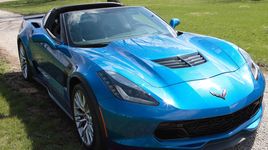
I have Topaz and it probably has the best noise reduction algorithm but I reserve it only for truly ugly files. Last season I was shooting an away game where most stadium lighting briefly glitched during a TD and as I recall I kept one image captured at ISO 102,400. But DPP really does a good job with normal higher ISO files out of my 1DX III bodies. This was a quick sidelines shot of a visitor between plays, ISO 51,200 run through DPP with no additional processing. DPP with no additional intervention does a great job of reducing noise while retaining decent detail at high ISO.
You wouldn't want to shoot a planned portrait at ISO 51,200 but it is fine for casual sidelines stuff.
Rodger
EOS 1DX M3, 1DX M2, 1DX, 5DS R, M6 Mark II, 1D M2, EOS 650 (film), many lenses, XF400 video

Options
- Mark as New
- Bookmark
- Subscribe
- Mute
- Subscribe to RSS Feed
- Permalink
- Report Inappropriate Content
06-05-2026 10:30 AM - edited 06-05-2026 10:33 AM
To say this politely most of the time problems like this are due to "the need of better coding" to take advantage of the hardware resources available. I realize that Canon in offering DPP at no cost must limit somewhat the investment they put into the development, but over all I think that are slowly improving the product.
Karl

Options
- Mark as New
- Bookmark
- Subscribe
- Mute
- Subscribe to RSS Feed
- Permalink
- Report Inappropriate Content
06-05-2026 10:55 AM
I also would like Linux binary of DPP. Some of the gtk libraries developed to make gimp portable should make it easier to create. https://en.wikipedia.org/wiki/GTK Static linking should be enough to get one binary to run on multiple versions of Linux.
DPP digital lens optimizer takes a similar amount of time to run as the Richardson/Lucy deconvolution in rawtherapee "capture sharpening".
I might try the neural network if it were free, but would not have high expectations.
My history with so called artificial intelligence.
In 1983 I read that LISP was the language of choice for AI and wrote my first program in LISP.
When I started a new job in 2000, I was surprised to find that one of the programs I was maintaining was originally written in LISP and later converted to C++. https://www.ll.mit.edu/r-d/publications/machine-intelligent-gust-front-algorithm I read the LISP source code. The C++ source code was fragile, but worked so long as doppler velocity was used as a sanity check.
Recently, I have been experimenting with llama.cpp Gemma4 offline running on CPU instead of GPU. I find it very difficult to get it to write good code, but when I ask a question about a subject where I have little knowledge, it gives a convincing answer. Changing the order of prompts changes the code that gemma writes. I have been attempting to get gemma to write code that will use libraw to read a raw file, do a R/L deconvolution on the raw integers as if they represented photon counts, and then write a raw DNG file to be processed by other raw development software. Part of the problem is that when gemma was trained, most examples of the use of libraw demosaiced the data and I want to keep it as raw.
I conclude that one of these decades, AI will be useful.
There is a good history of AI at https://www.ibm.com/think/topics/history-of-artificial-intelligence
Options
- Mark as New
- Bookmark
- Subscribe
- Mute
- Subscribe to RSS Feed
- Permalink
- Report Inappropriate Content
06-05-2026 11:02 AM
@Jkarl wrote:
To say this politely most of the time problems like this are due to "the need of better coding" to take advantage of the hardware resources available. I realize that Canon in offering DPP at no cost must limit somewhat the investment they put into the development, but over all I think that are slowly improving the product.
In the past it has been very difficult to write portable code that takes full advantage of the hardware it is running on. One of the problems with portable GPU code is that the chip manufacturers have often provided proprietary libraries to make it more difficult for one to use competitor's chips.
"better coding" is a moving target and takes a lot of resources over time. I also have seen improvements in DPP.

Options
- Mark as New
- Bookmark
- Subscribe
- Mute
- Subscribe to RSS Feed
- Permalink
- Report Inappropriate Content
06-05-2026 01:19 PM
what do you tweak in DPP to get better results? Just move the slider higher on the Digital Lens Optimizer on the Lens Correction tab? Or do you also adjust luminace and chrominance noise on the Adjust Image Detail tab? I have the lens data uploaded
>> Owns/Owned both Canon EOS mirrorless full-frame and APS-C cameras and associated RF, RF-S and EF adapted lenses - inventory tends to change on short notice. Same for flashes, tripods, bags, straps, etc.
Plus>> Canon imagePROGRAF PRO-1100 Printer. My photos are edited using no Adobe products.
>>The opinions and assistance are my own. Please don't blame Canon for any mistakes on my part.
Options
- Mark as New
- Bookmark
- Subscribe
- Mute
- Subscribe to RSS Feed
- Permalink
- Report Inappropriate Content
06-05-2026 02:07 PM - edited 06-05-2026 02:20 PM
I nearly always crop, change white balance from auto which I use in camera, change unsharp mask, increase digital lens optimizer from what the camera chose, and use DPRAW tool.
I often make small changes to exposure, dynamic range, saturation.
I occasionally use curves to adjust contrast, make image level.
Here is an example: https://www.rsok.com/~jrm/2026Apr30_birds_and_cats/IMG_5771c_2026apr03_titmouse.html web page that lists all edits in DPP and all changes made in other software as well as links to straight out of camera JPG, JPG saved by DPP, JPG made from 16 bit TIF saved by DPP, and difference between DPP JPG and final JPG.

| Camera Model Name | Canon EOS R5 |
| Lens Model | EF100-400mm f/4.5-5.6L IS II USM +1.4x III |
| Focal Length | 560 mm |
| Exposure Time | 1/1250 |
| ISO | 2500 |
| F Number | 9.0 |
| Camera Temperature | 30 C |
| Measured EV | 11.88 |
| Measured EV 2 | 21.5 |
| Focus Distance Upper | 18.79 m |
| Focus Distance Lower | 15.15 m |
| Artist | John Moyer |
| AngleAdj | 0.5 |
| WorkColorSpace | sRGB |
| WhiteBalanceAdj | Daylight |
| PictureStyle | Shot Settings |
| UnsharpMaskStrength | 1.7 |
| UnsharpMaskFineness | 4 |
| UnsharpMaskThreshold | 5 |
| ToneCurveOriginal | Yes |
| LuminanceNoiseReduction | 5 |
| ChrominanceNoiseReduction | 5 |
| DLOSetting | 40 |
| CropRotatedOriginalWidth | 8239 |
| CropRotatedOriginalHeight | 5535 |
| CropX | 1508 |
| CropY | 956 |
| CropWidth | 4500 |
| CropHeight | 3000 |
| CropRotation | 0 |
| CropAngle | 0.5 |
| CropOriginalWidth | 8192 |
| CropOriginalHeight | 5464 |
jpegli is now at https://github.com/google/jpegli
Options
- Mark as New
- Bookmark
- Subscribe
- Mute
- Subscribe to RSS Feed
- Permalink
- Report Inappropriate Content
06-05-2026 02:22 PM
Thank you. I don't know what the DPRAW tool is. I honestly have never used any of the tools in the TOOLS menu. Is your "DPRAW" "Start Dual Pixel Raw Optimizer" in the tool menu?
Seems that there is still a lot to explore in DPP for me, perhaps.
>> Owns/Owned both Canon EOS mirrorless full-frame and APS-C cameras and associated RF, RF-S and EF adapted lenses - inventory tends to change on short notice. Same for flashes, tripods, bags, straps, etc.
Plus>> Canon imagePROGRAF PRO-1100 Printer. My photos are edited using no Adobe products.
>>The opinions and assistance are my own. Please don't blame Canon for any mistakes on my part.
Options
- Mark as New
- Bookmark
- Subscribe
- Mute
- Subscribe to RSS Feed
- Permalink
- Report Inappropriate Content
06-06-2026 05:54 AM
@SignifDigits wrote:
Thank you. I don't know what the DPRAW tool is. I honestly have never used any of the tools in the TOOLS menu. Is your "DPRAW" "Start Dual Pixel Raw Optimizer" in the tool menu?
Seems that there is still a lot to explore in DPP for me, perhaps.
Since the DPRAW two images have a very slight difference in angle of view, they can sometimes be used to get depth information like with synthetic aperture radar.
Synthetic aperture
https://cam.start.canon/en/S002/manual/html/UG-05_Synthetic_0070.html#Synthetic_0070_1
https://en.wikipedia.org/wiki/Aperture_synthesis
https://www.canon.ie/cameras/eos-r5/dual-pixel-raw-mode/
Using the free Digital Photo Professional software, the maximum point of sharpness can be shifted slightly from the position used when the shot was taken. This is great for portrait photographers wanting to fine-tune critical sharpness, if a subject’s eyes are not perfectly in focus, for instance.
If one leaves forward/back at zero and increases the amount, it gives the appearance of slightly increasing depth of field.
An example: https://www.rsok.com/~jrm/2026May31_birds_and_cats/IMG_5919c_2026may14_cardinal.html

Straight out of camera JPG: https://www.rsok.com/~jrm/2026May31_birds_and_cats/IMG_5919.JPG
JPG created by cjpegli before down sizing: https://www.rsok.com/~jrm/2026May31_birds_and_cats/IMG_5919c2.JPG ( I was not able to recover all of the clipped reds )
Auto metering wanted to preserve shadows and the bird did not stay posed long enough for me to do multiple exposure compensation trials. This one is -2/3 and still reds are clipped. The shadows did not interest me and I did not mind shadows losing detail but I still brightened them slightly using the tone curve.
Edits in DPP:
| ExifToolVersion | 13.25 |
| FileName | IMG_5919.dr4 |
| RawBrightnessAdj | -0.67 |
| WhiteBalanceAdj | Daylight |
| UnsharpMaskStrength | 1.5 |
| UnsharpMaskFineness | 3 |
| UnsharpMaskThreshold | 3 |
| RGBCurvePoints | (0,0) (64,80) (128,128) (255,255) |
| ToneCurveX | 64 |
| ToneCurveY | 80 |
| DLOSetting | 55 |
| GammaBlackPoint | +0.000 |
| GammaWhitePoint | +1.900 |
| GammaMidPoint | +0.000 |
| DPRAWMicroadjustBackFront | 0 |
| DPRAWMicroadjustStrength | 8 |
| CropRotatedOriginalWidth | 8249 |
| CropRotatedOriginalHeight | 5549 |
| CropX | 354 |
| CropY | 129 |
| CropWidth | 7200 |
| CropHeight | 4800 |
| CropRotation | 0 |
| CropAngle | 0.6 |
| CropOriginalWidth | 8192 |
| CropOriginalHeight | 5464 |

Options
- Mark as New
- Bookmark
- Subscribe
- Mute
- Subscribe to RSS Feed
- Permalink
- Report Inappropriate Content
09-02-2026 03:52 PM
Any idea why the links to DPP have disappeared from the Canon USA site under support for specific cameras? I need to download it, EOSU & NN to a new Win 11 laptop, so thanks for this link, this note of yours is the only reference to it that now comes up from Google search!
Options
- Mark as New
- Bookmark
- Subscribe
- Mute
- Subscribe to RSS Feed
- Permalink
- Report Inappropriate Content
09-02-2026 03:57 PM
@JamesHarvey I can only offer you a link to all the Canon Applications, they now have them in one centralized location. I hope this helps. I believe you will find what you need and more....
EOS / PowerShot / SELPHY Apps & software
Marc
Windy City
To find common ground you must be willing to search for it.
Our interests intersect more than they diverge.
R5 Mk II ~ R6 Mk III ~ R7
Lenses: RF Trinity and others
Adobe and DxO PhotoLab Elite for post processing
Personal Gallery


Announcements
07/22/2026: New firmware updates are available.
EOS R6 Mark III - Version 1.1.0
05/13/2026: New firmware updates are available.
EOS R5 Mark II - Version 1.3.0
EOS R6 Mark II - Version 1.7.0
04/28/2026: Service Notice: Caution Concerning use of Lithium Batteries
03/17/2026: New firmware updates are available.
SELPHY CP1500 - Version 1.0.7.0
02/23/2026: New firmware update is available for EOS C50- Version 1.0.3.1
01/23/2026: New firmware update is available for RF 24-105mm F4 IS USM- Version 2.0.7
01/20/2026: New firmware updates are available.
10/21/2025: Service Notice: To Users of the Compact Digital Camera PowerShot V1
10/15/2025: New firmware updates are available.
Speedlite EL-5 - Version 1.2.0
Speedlite EL-1 - Version 1.1.0
Speedlite Transmitter ST-E10 - Version 1.2.0
07/28/2025: Notice of Free Repair Service for the Mirrorless Camera EOS R50 (Black)
05/21/2025: New firmware update available for EOS C500 Mark II - Version 1.1.5.1
Related Content
- Feature Request: Modernizing the "Depth Compositing" Tool in DPP 4 (GPU Acceleration & 16-bit TIFF/D in Camera Software
- Digital Photo Professional compatibility with EOS R6 Mark III and Windows 10 in Camera Software
- DPP4: "Target file does not exist" in Camera Software
- Digital Photo Professional 4 Latest Version - Adjust Specific Area "Undo" Not Working in Camera Software
- EDSDK download link expired in Camera Software

Ⓒ 2026
Canon U.S.A Inc. All Rights Reserved. Reproduction in whole or part without permission is prohibited.
