Turn on suggestions
Auto-suggest helps you quickly narrow down your search results by suggesting possible matches as you type.
- Canon Community
- Discussions & Help
- General Discussion
- General Discussion
- Photography ethics: minors in a public space
Options
- Subscribe to RSS Feed
- Mark Topic as New
- Mark Topic as Read
- Float this Topic for Current User
- Bookmark
- Subscribe
- Mute
- Printer Friendly Page


Options
- Mark as New
- Bookmark
- Subscribe
- Mute
- Subscribe to RSS Feed
- Permalink
- Report Inappropriate Content
07-11-2025 07:02 AM
As a general rule, I don't publish (non-commercial) photos of minors without parent consent. But now that I'm getting into surf photography, I see "groms" (young surfers) padding out and having a blast all the time. A lot of them are good enough to surf the lineup with the adults. I usually end up with several good shots each session.
I know I can legally publish them. In the United States, there is no expectation of privacy on a public beach - and it probably doesn't hurt that this is a sport that has a longstanding and well-established cadre of amateur photographers/videographers.
But is it ethical? Thoughts and/or links to resources on the same are appreciated!
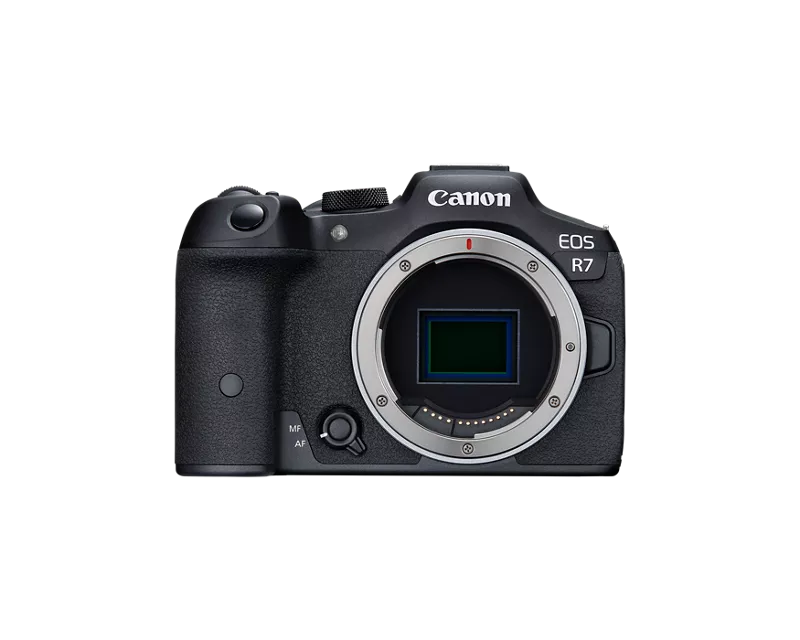
EOS R7 + EF100-400mm f/4.5-5.6L IS II USM
Solved! Go to Solution.
1 ACCEPTED SOLUTION
Accepted Solutions

Options
- Mark as New
- Bookmark
- Subscribe
- Mute
- Subscribe to RSS Feed
- Permalink
- Report Inappropriate Content
07-11-2025 09:55 AM
If the minors are recognizable, and you don't have the permission of the parents, then don't. It's not ethical. It's different if the photos are of adults in a public place. Even though it's technically legal in the U.S. think how you would feel if someone else was publishing photos of your kids without permission.
The exception would be if you were hired by the event organizer. For example, I'm often hired to shoot marathons and triathlons. Mostly adults competing, but kids as well, and it's my job to photograph as many of the athletes (of all ages) as possible. Of course, these images are turned over to the event organizer. As the photographers we are encouraged to post a handful of images on social media on our own personal accounts... BUT, we must include the name of the event, and links back to help promote the organization and future events. However, for me to post photos of the kids competing without including that information and links, totally unethical. I should add unless it was my own kids when they were young, or with permission of the parents.
Gary
Lake Michigan Area MI
Digital Cameras: Canon EOS R6 Mk ll, EOS R8, EOS RP, ...and a few other brands
Film Cameras: Mostly Pentax, Kodak, and Zenit... and still heavily used
4 REPLIES 4
Options
- Mark as New
- Bookmark
- Subscribe
- Mute
- Subscribe to RSS Feed
- Permalink
- Report Inappropriate Content
07-11-2025 09:55 AM
If the minors are recognizable, and you don't have the permission of the parents, then don't. It's not ethical. It's different if the photos are of adults in a public place. Even though it's technically legal in the U.S. think how you would feel if someone else was publishing photos of your kids without permission.
The exception would be if you were hired by the event organizer. For example, I'm often hired to shoot marathons and triathlons. Mostly adults competing, but kids as well, and it's my job to photograph as many of the athletes (of all ages) as possible. Of course, these images are turned over to the event organizer. As the photographers we are encouraged to post a handful of images on social media on our own personal accounts... BUT, we must include the name of the event, and links back to help promote the organization and future events. However, for me to post photos of the kids competing without including that information and links, totally unethical. I should add unless it was my own kids when they were young, or with permission of the parents.
Gary
Lake Michigan Area MI
Digital Cameras: Canon EOS R6 Mk ll, EOS R8, EOS RP, ...and a few other brands
Film Cameras: Mostly Pentax, Kodak, and Zenit... and still heavily used

Options
- Mark as New
- Bookmark
- Subscribe
- Mute
- Subscribe to RSS Feed
- Permalink
- Report Inappropriate Content
07-13-2025 01:52 PM - edited 07-13-2025 01:52 PM
I wrote an article and took photographs about a fly fishing event. Lots of kids. I asked the parents for permission and told them where the article and photos would be shown on a local TV station's online news. Got their OK.
This was a direction from the editor.
John
Canon EOS T7; EF-S 18-55mm IS; EF 28-135mm IS; EF 75-300mm; Sigma 150-600mm DG
Canon EOS T7; EF-S 18-55mm IS; EF 28-135mm IS; EF 75-300mm; Sigma 150-600mm DG
Options
- Mark as New
- Bookmark
- Subscribe
- Mute
- Subscribe to RSS Feed
- Permalink
- Report Inappropriate Content
07-13-2025 10:54 PM
thanks for the feedback everybody!
EOS R7 + EF100-400mm f/4.5-5.6L IS II USM

Options
- Mark as New
- Bookmark
- Subscribe
- Mute
- Subscribe to RSS Feed
- Permalink
- Report Inappropriate Content
07-16-2025 02:56 PM - edited 07-16-2025 02:58 PM
Hi mdphotography,
📸 In the U.S., photography ethics revolve around respect, consent, and truthfulness—balancing creative freedom with responsibility. Here's a breakdown of the key principles:
🧍 Respect for Subjects
- Informed consent is essential, especially when photographing identifiable individuals in sensitive contexts.
- Avoid exploiting vulnerable subjects or intruding on private moments—even in public spaces.
- Be mindful of cultural, religious, and personal boundaries.
🕊️ Truthfulness and Accuracy
- Photojournalism demands minimal editing—no staging or manipulation that alters the story.
- Disclose any significant post-processing, especially in documentary or editorial work.
- Avoid misleading captions or contexts that distort reality.
🧠 Cultural Sensitivity
- Represent diverse communities authentically—steer clear of stereotypes or exoticism.
- Understand the impact your images may have on public perception and social narratives.
🛡️ Privacy and Legal Boundaries
- While photographing in public is generally legal, ethical practice means respecting personal space and didignity. For commercial use, obtain model releases and respect copyright laws.
- Sharing images online? Always credit the creator and ensure subjects are comfortable with public exposure.
🧬 AI and Manipulation
- With the rise of AI-generated images, transparency about how a photo was created is more important than ever.
- Ethical photographers avoid deceptive practices that could erode trust in visual media.
If you're shooting wildlife, landscapes, or macro work, these ethics still apply, especially when it comes to truthful representation and environmental impact.
Cheers,
Joe
Ancora Imparo
"A good photograph is knowing where to stand."
--- Ansel Adams >
"You don’t take a photograph, you make it."
--- Ansel Adams
Joe
Ancora Imparo
"A good photograph is knowing where to stand."
--- Ansel Adams >
"You don’t take a photograph, you make it."
--- Ansel Adams

Announcements
07/22/2026: New firmware updates are available.
EOS R6 Mark III - Version 1.1.0
05/13/2026: New firmware updates are available.
EOS R5 Mark II - Version 1.3.0
EOS R6 Mark II - Version 1.7.0
04/28/2026: Service Notice: Caution Concerning use of Lithium Batteries
03/17/2026: New firmware updates are available.
SELPHY CP1500 - Version 1.0.7.0
02/23/2026: New firmware update is available for EOS C50- Version 1.0.3.1
01/23/2026: New firmware update is available for RF 24-105mm F4 IS USM- Version 2.0.7
01/20/2026: New firmware updates are available.
10/21/2025: Service Notice: To Users of the Compact Digital Camera PowerShot V1
10/15/2025: New firmware updates are available.
Speedlite EL-5 - Version 1.2.0
Speedlite EL-1 - Version 1.1.0
Speedlite Transmitter ST-E10 - Version 1.2.0
07/28/2025: Notice of Free Repair Service for the Mirrorless Camera EOS R50 (Black)
05/21/2025: New firmware update available for EOS C500 Mark II - Version 1.1.5.1
Related Content
- Request for Donation of Photography Equipment for Student Artists at NWSA in General Discussion
- The Fall and Rise of Vivian Maier: in General Discussion
- Celebrating World Photography Day: Aug 19th 1839 in General Discussion
- What's the proper way to ask to get into High School sporting events? in General Discussion

Ⓒ 2026
Canon U.S.A Inc. All Rights Reserved. Reproduction in whole or part without permission is prohibited.
