Turn on suggestions
Auto-suggest helps you quickly narrow down your search results by suggesting possible matches as you type.
- Canon Community
- Discussions & Help
- Camera
- EOS DSLR & Mirrorless Cameras
- Please bring shutter protection to the Canon R10 (...
Options
- Subscribe to RSS Feed
- Mark Topic as New
- Mark Topic as Read
- Float this Topic for Current User
- Bookmark
- Subscribe
- Mute
- Printer Friendly Page
Please bring shutter protection to the Canon R10 (especially for beginners and wildlife shooters)

Options
- Mark as New
- Bookmark
- Subscribe
- Mute
- Subscribe to RSS Feed
- Permalink
- Report Inappropriate Content
07-28-2025 02:55 AM
I wanted to raise something that’s been on my mind for a while now — and I’m hoping Canon sees this, but I also really want to hear what others think too.
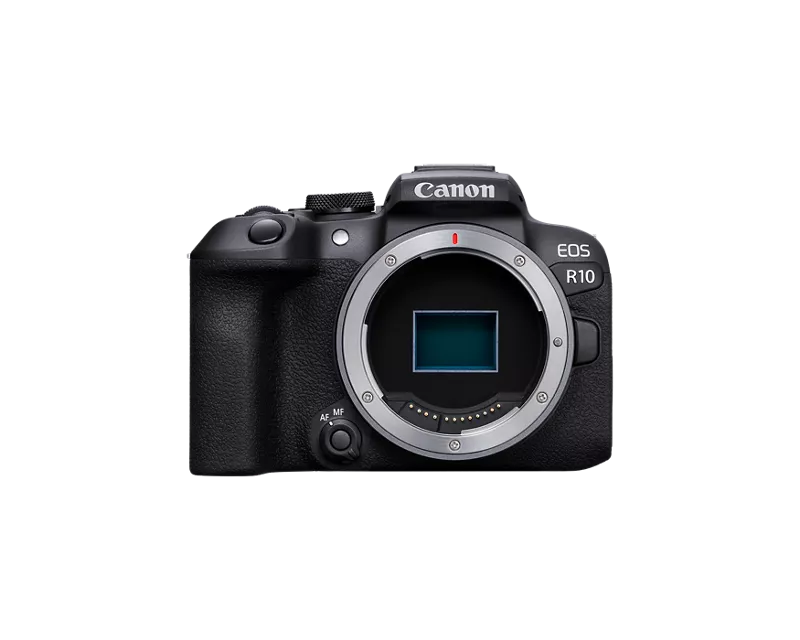
I shoot with the Canon EOS R10. It’s a brilliant little camera and incredibly capable for its size and price. But the one thing I constantly struggle with is that there’s no option for the shutter to close when I turn off the camera or change a lens. And honestly? It’s a huge deal, especially if you’re working outdoors in remote and dusty environments.
I recently got back from a trip to Chobe in Botswana, and I’ve also shot in Caprivi and the Kruger National Park — places that are absolutely incredible for photography, but incredibly rough on your gear. I use just one camera body, and I often need to swap between my 10mm, 24-70mm, and 150-600mm lenses. Every time I do, I basically sprint to my car or try to find a bathroom just to shield the sensor from dust — and even then, I’ve still gotten dust on the sensor, especially in Chobe.
And once that happens? I’m stuck. There’s no sensor-cleaning station out in the bush, and I’m hesitant to do it myself (I’d rather leave that to pros). I had to spend hours cleaning up spots in post from just one small spec that landed during a lens change. That’s not something you want when you’re chasing once-in-a-lifetime shots.
What really gets me, though, is that this is a software-fixable issue. Other Canon bodies can close the shutter on power-off or lens removal. The R10 has pre-capture and other smart features — surely this could be added via firmware?
And here’s the thing: while I’d love it for my own wildlife work, I actually think this feature is even more important for beginners — and the R10 is aimed squarely at beginner and enthusiast photographers. Beginners don’t always know how to protect the sensor, or how to change lenses quickly. Pro users have the tricks; newbies don’t. So why wouldn’t this kind of sensor protection be built into Canon’s entry-level mirrorless cameras by default?
I’ve spoken to Canon support over the phone before, but I’m putting this out here in the hopes that more people can weigh in, and maybe — just maybe — Canon will consider this a priority for a future firmware update.
I’d love to hear if others have faced the same issue, or if you’ve found workarounds. And if anyone from Canon is reading this — please know that it’s not a small complaint. It’s a real barrier for people who want to do serious work with their cameras but don’t have the gear (or budget) to run multiple bodies or get daily cleanings.
Thanks for reading,
Albertus van Jaarsveld
7 REPLIES 7


Options
- Mark as New
- Bookmark
- Subscribe
- Mute
- Subscribe to RSS Feed
- Permalink
- Report Inappropriate Content
08-24-2025 08:19 PM
Do you shoot with just one body? I fully get what you're saying though.
-----
Digital via Canon R100 and R8. Analog via Pentax, Nikon, and Minolta 35mm SLRs and via Mamiya RB67 and 645, not to mention the persnickety Pentax 17.

Options
- Mark as New
- Bookmark
- Subscribe
- Mute
- Subscribe to RSS Feed
- Permalink
- Report Inappropriate Content
08-24-2025 09:01 PM
Greetings,
Feature requests (such as this) should be made on the Canon USA homepage. Select [+]Feedback which is at the top right or at the bottom of the page. Leave this request there. This ensures your feedback gets to the right team..
~Rick
Bay Area - CA
~R5 C (1.1.3.1), ~RF Trinity, ~RF 100 Macro, ~RF 100~400, ~RF 100~500, ~RF 200-800, ~RF 1.4x TC, BG-R10, 430EX III-RT ~DxO PhotoLab Elite ~DaVinci Resolve Studio ~ImageClass MF644Cdw MF656Cdw ~Pixel 10 ~CarePaks Are Worth It

Options
- Mark as New
- Bookmark
- Subscribe
- Mute
- Subscribe to RSS Feed
- Permalink
- Report Inappropriate Content
08-25-2025 04:42 AM
One other viewpoint is that it’s easier to clean the sensor than replace a shutter assembly that has bent shutter curtains because someone pressed against them. They are quite fragile, this could be the reason for the way the R10 works. I have the camera myself too.
Brian
EOS specialist trainer, photographer and author
-- Note: my spell checker is set for EN-GB, not EN-US --

Options
- Mark as New
- Bookmark
- Subscribe
- Mute
- Subscribe to RSS Feed
- Permalink
- Report Inappropriate Content
08-25-2025 10:10 AM
Actually, I get more concerned when I change lenses on my R6 Mk ll the I do on my R8 or RP. Sure, the sensor is exposed on these two, but that's easily cleaned with a rocket blower. On the R6 Mk ll I'm always extra cautious about not bumping the shutter, or careful of not getting dust stuck on that, causing mechanical problems.
So maybe (and I'm just guessing here) Canon, Sony, Nikon, and whoever else builds their entry level cameras this way figure that if something gets accidentally touched, it would be better if they touched the sensor than the shutter assembly.
If you want an easy solution, maybe purchase a magnetic drop-in UV filter to cover the sensor when the lens is off. Koliari Vision has some very nice quality drop in filters... mostly infrared filters (of course) but they do have a UV/Dust clear filter. Other companies may have them as well.
If you look at the two photos below, one shows what it looks like with the mag mount installed, then the second shot shows what the clip in filters look like (yes, this one is infrared... they sell clear, but did not have images on their site... so picture this with clear glass). For Canon, mount and filter costs around $100, which when you think about very good quality lens filters, it's a similar price. Have I personally used these? No... I'm heavily invested into infrared lens filters, so I have not switched. However, one of my best friends sold off his lens filters and switched to these last year for his Sony, and he loves them. 

Gary
Lake Michigan Area MI
Digital Cameras: Canon EOS R6 Mk ll, EOS R8, EOS RP, ...and a few other brands
Film Cameras: Mostly Pentax, Kodak, and Zenit... and still heavily used
Options
- Mark as New
- Bookmark
- Subscribe
- Mute
- Subscribe to RSS Feed
- Permalink
- Report Inappropriate Content
08-25-2025 11:40 AM
At least with EOS R6 Mk2 you have the choice to have the shutter closed or open on power off.
https://cam.start.canon/en/C012/manual/html/UG-08_Set-up_0290.html
Brian
EOS specialist trainer, photographer and author
-- Note: my spell checker is set for EN-GB, not EN-US --
Options
- Mark as New
- Bookmark
- Subscribe
- Mute
- Subscribe to RSS Feed
- Permalink
- Report Inappropriate Content
08-25-2025 02:45 PM
The last time I read through the manual, front to back, was on the first day I owned it, which is getting close to two years ago. Obviously I didn't retain that page in my memory. Thanks for pointing it out, Brian! I'm going to change that right now while I'm thinking of it.
Gary
Lake Michigan Area MI
Digital Cameras: Canon EOS R6 Mk ll, EOS R8, EOS RP, ...and a few other brands
Film Cameras: Mostly Pentax, Kodak, and Zenit... and still heavily used

Options
- Mark as New
- Bookmark
- Subscribe
- Mute
- Subscribe to RSS Feed
- Permalink
- Report Inappropriate Content
08-25-2025 04:44 PM
I have several R series cameras and I set mine to have the shutter close on shutdown. In my experience, over the past 4 years, it doesn't seem to make any difference in keeping the sensor clean. Dust is sometimes going to get in during a lens change and it just settles on the shutter blades. Now, when you take a shot all of that dust/debris shakes off into the sensor box or the exit pupil of the lens.
If it doesn't make any difference to me, then why do I set it to close? I do it just in case I get careless and expose my sensor to direct sun or a laser or any other extreme light source. I don't typically attach a lens cap every time I shut off my camera.
I always have a large "Rocket" blower or sensor brush handy but seldom have to use the brush for a lens change, just the Rocket 🙂
Newton

Announcements
07/22/2026: New firmware updates are available.
EOS R6 Mark III - Version 1.1.0
05/13/2026: New firmware updates are available.
EOS R5 Mark II - Version 1.3.0
EOS R6 Mark II - Version 1.7.0
04/28/2026: Service Notice: Caution Concerning use of Lithium Batteries
03/17/2026: New firmware updates are available.
SELPHY CP1500 - Version 1.0.7.0
02/23/2026: New firmware update is available for EOS C50- Version 1.0.3.1
01/23/2026: New firmware update is available for RF 24-105mm F4 IS USM- Version 2.0.7
01/20/2026: New firmware updates are available.
10/21/2025: Service Notice: To Users of the Compact Digital Camera PowerShot V1
10/15/2025: New firmware updates are available.
Speedlite EL-5 - Version 1.2.0
Speedlite EL-1 - Version 1.1.0
Speedlite Transmitter ST-E10 - Version 1.2.0
07/28/2025: Notice of Free Repair Service for the Mirrorless Camera EOS R50 (Black)
05/21/2025: New firmware update available for EOS C500 Mark II - Version 1.1.5.1
Related Content
- Do you use the viewfinder cap? in Camera Accessories
- Do you use a range of lens filters on a "typical" day? in Camera Accessories
- Is there a protective glass screen protector for EVF for R5 mk2? in Camera Accessories
- Protecting non-weather sealed lenses in EF & RF Lenses
- R5 II touch screen protection? in Camera Accessories

Ⓒ 2026
Canon U.S.A Inc. All Rights Reserved. Reproduction in whole or part without permission is prohibited.
